New Patient Patient Survey Not Feeling Well?

384 West Street N, Orillia, ON L3V 5E6 Canada
Phone: (705) 325-6591 – Fax: (705) 325-9309
Email: questions@visualsurgery.com

Visual Surgery
  • Home
  • About
    • Our Practice
    • Meet Dr. Hillson
    • For Patients
    • Patient Survey
    • Locations / Contact
    • Careers
    • Links
    • Improv Night at the Opera House!
    • Dr Jeff Hurwitz Memorial Scholarship
    • Kenya Project
    • Zeiss Laser Efficiency Video
  • Videos
  • Prepare For Your Visit
  • Cataract
    • Learn About Cataracts
    • Cataract Surgery in Ontario
    • Cataract Testing
    • Which Lens is Right for You?
    • Cataract Surgery
    • What to Expect: A Timeline
    • Post-Cataract Surgery Laser
  • AMD
    • Learn About AMD
    • AMD Treatments
      • Eye Vitamins
      • Anti-VEGF Treatments
      • Your Intravitreal Injection
  • Diabetic Retinopathy
    • About Diabetic Retinopathy
    • Diabetic Retinopathy Treatments
      • Focal Laser
      • Pan-Retinal Photocoagulation
      • Anti-VEGF Drugs
      • Your Intravitreal Injection
  • Glaucoma
    • Learn About Glaucoma
    • Glaucoma Testing
    • Treatments for Glaucoma
      • Glaucoma Medications
      • SLT Treatment
      • Peripheral Iridotomy
      • Glaucoma Surgery
  • Other Conditions
    • Eye Conditions
      • Retinal Diseases
        • Retinal Testing
          • OCT Testing
          • Fluorescein Angiography
        • Other Retinal Diseases
          • Retinal Artery Occlusions
            • Branch Retinal Artery Occlusion
            • Central Retinal Vein Occlusion
          • Retinal Vein Occlusions
            • Branch Retinal Vein Occlusion
            • Central Retinal Artery Occlusion
          • Central Serous Retinopathy
          • Epiretinal Membrane
          • Retinal Tear/Detachment
          • Myopic Degeneration
          • Retinitis Pigmentosa
          • Uveltis
          • Retinopathy of Prematurity
          • Macular Hole
          • Anti-VEGF For Other Retinal Diseases
            • Your Intravitreal Injection
      • Eyelid Disorders
        • Entropion
        • Ectropion
        • Eyelid and Orbital Tumours
        • Blepharitis
        • Chalazion
      • Pediatric Eye Conditions
        • Amblyopia (Lazy Eye)
        • Glasses for Children
        • Strabismus (Crossed Eyes)
      • Corneal Diseases
        • Herpes Keratitis
        • Corneal Abrasion/Erosion
        • Keratoconus
        • Lid Margin Disease
        • Pterygium/Pingueculum
        • Recurrent Corneal Erosion
        • Fuchs Endothelial Dystrophy
        • Dry Eyes
        • Conjunctivitis
      • Neuroophthalmology
        • Giant Cell Arteritis
        • Bells Palsy
        • Multiple Sclerosis
        • Headache
        • Optic Neuritis
        • Diplopia
    • Refractive Lensectomy
    • General Interest
      • Herpes Zoster Shingles
      • Smoking and the Eye
      • Complete Eye Exam
      • Recycling Eyeglasses
      • How to Use Eyedrops
      • Computer Screens
      • Contact Lenses
      • Viewing a Solar Eclipse
      • Sunglasses
      • Eyeglasses
      • Colour Blindness
      • Legal Blindness
      • Floaters and Flashes
    • FAQs
  • Diagnostic Testing
    • Visual Field Testing
    • Corneal Topography
    • IOLMaster Testing
    • Wavefront Analysis
    • OCT Testing
    • OCT Angiography
    • Fundus Autofluorescence Imaging
    • UWF Retinal Imaging
  • Click to open the search input field Click to open the search input field Search
  • Menu Menu

Peripheral Iridotomy

What is laser peripheral iridotomy?

A Laser peripheral iridotomy is a surgical procedure in which a laser is used to create an opening in the iris (the coloured part of the eye) so that fluid can leave the angle of the eye more easily. It is performed for patients with narrow angles, or angles that look like they might be prone to closure. Narrow angles may predispose one to an episode of angle closure glaucoma, in which raised pressure in the eye can rapidly threaten vision and even cause blindness.


What happens during the procedure?
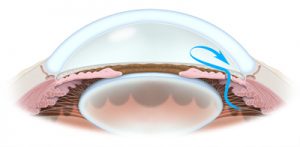
This procedure is performed in our office.  Dr Hillson uses eye drops to numb your eye and to make the pupil small. A special contact lens is put on your eye to help direct the laser’s high-energy beam of light at the iris in your eye. The laser makes one or two holes in the iris. You will see a few brief flashes of light and feel little, if any, discomfort. The procedure usually takes less than 5 minutes. You will be able to go home soon after it is done, but you should arrange for a driver the day of the laser procedure.

What are the risks?

Although there are some risks with the laser treatment such as inflammation, bleeding inside the eye, and raised pressure in the eye, the risks are fewer risks than with other types of surgery. Problems may occur that could threaten your vision, but they are rare. If you have any questions about the risks of this laser treatment, ask Dr Hillson.

What happens after the procedure?

You will receive a prescription for a steroid drop from Dr. Hillson after your surgery is completed. Take your usual glaucoma drops as well as the steroid drops four times a day for 5 days to the operated eye(s).  You will have an appointment about two hours after the laser procedure the same day of your surgery to check the eye pressure.

Your vision will probably be blurred for a short period, but then it should clear in an hour or two. You will not need to wear an eye patch. If your vision does not clear within a day or if you feel any pain or discomfort, call Dr Hillson. If it is the evening or the weekend and you are having problems, you should go to emergency to be assessed.

This procedure is almost always successful.

  • Glaucoma
    • Learn About Glaucoma
    • Glaucoma Testing
    • Treatments for Glaucoma
      • Glaucoma Medications
      • SLT Treatment
      • Peripheral Iridotomy
      • Glaucoma Surgery
  • Cataract
    • Learn About Cataracts
    • Cataract Surgery in Ontario
    • Cataract Testing
    • Which Lens is Right for You?
    • Cataract Surgery
    • What to Expect: A Timeline
    • Post-Cataract Surgery Laser
  • Retinal Diseases
    • Retinal Testing
      • OCT Testing
      • Fluorescein Angiography
    • AMD
      • Learn About AMD
      • AMD Treatments
        • Eye Vitamins
        • Anti-VEGF Treatments
        • Your Intravitreal Injection
    • Diabetic Retinopathy
      • About Diabetic Retinopathy
      • Diabetic Retinopathy Treatments
        • Focal Laser
        • Pan-Retinal Photocoagulation
        • Anti-VEGF Drugs
        • Your Intravitreal Injection
    • Other Retinal Diseases
      • Retinal Artery Occlusions
        • Branch Retinal Artery Occlusion
        • Central Retinal Artery Occlusion
      • Retinal Vein Occlusions
        • Central Retinal Vein Occlusion
        • Branch Retinal Vein Occlusion
      • Central Serous Retinopathy
      • Epiretinal Membrane
      • Retinal Tear/Detachment
      • Myopic Degeneration
      • Retinitis Pigmentosa
      • Uveltis
      • Retinopathy of Prematurity
      • Macular Hole
      • Anti-VEGF For Other Retinal Diseases
        • Your Intravitreal Injection
  • Eyelid Disorders
    • Entropion
    • Ectropion
    • Eyelid and Orbital Tumours
    • Blepharitis
    • Chalazion
  • Pediatric Eye Conditions
    • Amblyopia (Lazy Eye)
    • Glasses for Children
    • Strabismus (Crossed Eyes)
  • Corneal Diseases
    • Herpes Keratitis
    • Corneal Abrasion/Erosion
    • Keratoconus
    • Lid Margin Disease
    • Pterygium/Pingueculum
    • Recurrent Corneal Erosion
    • Fuchs Endothelial Dystrophy
    • Dry Eyes
    • Conjunctivitis
  • Neuroophthalmology
    • Giant Cell Arteritis
    • Bells Palsy
    • Multiple Sclerosis
    • Headache
    • Optic Neuritis
    • Stroke
    • Diplopia

Our Practice

While on emergency call our practice sees patients from the Local Health Integration Network (LHIN) #12 which includes Barrie, Bracebridge, Collingwood, Gravenhurst, Huntsville, Midland, Penetanguishene, and Wasaga Beach.We see elective medical and surgical patients from the Orillia area.

About Dr. Hillson

Dr Tim Hillson is an Ophthalmologist (Eye Physician & Eye Surgeon) based in Orillia, Ontario. He treats patients with eye disorders that include, cataracts, glaucoma, age-related macular degeneration (AMD), diabetic retinopathy, and other conditions.

Our Hours

Mon-Thurs: 8:30am - 4:00pm
Fri: 8:30am - 12:00pm
Sat-Sun: Closed

Site Navigation

Home
About Us
For Patients
Eye Conditions
Special Tests
Links
Locations/Contact Us
Careers

© Copyright 2017 and Beyond - Dr. Tim Hillson - Powered by  SchmidtDigital.ca
Scroll to top Scroll to top Scroll to top